
OnlyFans Whale Strategy: How to Identify, Route and Retain High Spenders
Build a whale strategy that spots high spenders early, routes them to the right chatter, and protects revenue without overmessaging.

A whale strategy is not about chasing every big buyer. It is about identifying the fans who show unusually strong spending potential, routing them to the right person fast, and retaining them without turning the inbox into a blunt sales machine. In practice, that means treating whales as relationships to manage, not just transactions to close.
The best results usually come from a simple rule: spot high-value behavior early, assign a strong owner, and keep the interaction personal. That is where PPV pricing, chatter scripts, and retention tactics work together instead of fighting each other.
Key Takeaways
- Whales are identified by patterns, not labels. Look for repeated buying behavior, fast responses, and custom interest.
- Routing matters as much as spotting. The wrong owner or slow handoff can waste the value you just identified.
- Retention is about consistency. VIP attention, memory, and paced offers usually outperform aggressive blasting.
- Not every high spender wants the same experience. Some want fast intimacy, others want exclusivity, and some want custom content.
- Substy helps most when whale management is tied to CRM notes, fan memory, triggers, and team ownership.
What makes a whale valuable
A whale is a fan whose spending behavior makes them materially more important than the average subscriber. The exact threshold is not the point. What matters is that their behavior justifies faster response times, better notes, and more deliberate ownership. A whale is valuable because they buy repeatedly, respond to tailored offers, and keep moving the relationship forward.
The danger is overreacting. A fan can look promising after one large purchase and still never repeat. Another fan may buy smaller amounts but do so consistently for months. Good whale strategy separates temporary spikes from durable value. That is why a strong routing system matters more than a one-time sale.
Signals worth watching
Watch for repeated PPV unlocks, a habit of tipping, quick responses to personal messages, direct requests for custom content, and steady conversation depth. Also watch for timing. Some fans only spend after a warm-up sequence, while others buy quickly when the offer feels exclusive. The pattern tells you how to serve them next.
Signals that are not enough on their own
A single large tip, one enthusiastic reply, or one custom request does not automatically make someone a whale. Those are signals to investigate, not a reason to overpromise. The safest strategy is to score behavior over time and compare it with response quality, not just dollar amount.
A practical whale framework
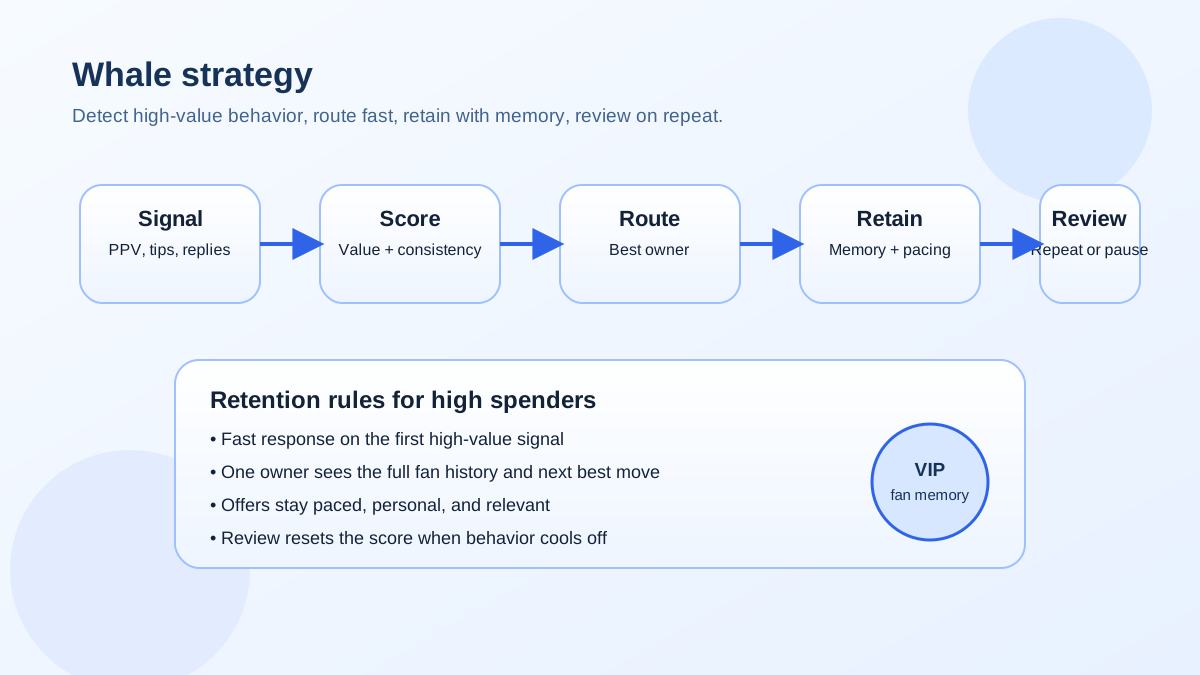
Use a four-part framework that keeps the process disciplined. First, detect the signal. Second, score the fan based on value and consistency. Third, route the conversation to the right owner. Fourth, retain the relationship with a paced plan instead of a constant upsell loop.
1. Detect
Detect the behaviors that matter most to your page. That can include PPV unlock rate, spending frequency, message speed, and whether the fan asks for custom or premium treatment. Detection should be simple enough that your team can apply it every day.
2. Score
Assign a practical score, not a complicated formula. A fan who buys once and disappears is not the same as a fan who buys three times in a week and keeps replying. A light scorecard keeps the team honest and makes handoffs easier to justify.
3. Route
Route whales to the person best equipped to keep the conversation moving. In some agencies that is a senior chatter. In others it is the creator herself. The main rule is that the owner should know the fan’s history and the next best offer before sending anything.
4. Retain
Retention is where most teams underperform. Whales do not need constant pressure. They need consistency, memory, and enough exclusivity to stay engaged. A well-timed follow-up often matters more than a louder pitch. If you need a broader system, connect whale routing to multi-account management and the workflows already used for your highest-value pages.
Whale signal table
| Signal | What it may indicate | Immediate action | Common mistake |
|---|---|---|---|
| Repeated PPV unlocks | High trust in the offer pattern | Keep the offer relevant and avoid overloading the same fan | Sending the next PPV too soon with no context |
| Fast replies to direct messages | High attention and open conversation | Route to a strong owner and move quickly | Leaving the fan in a generic queue |
| Custom requests | Willingness to pay for personal treatment | Log the preference and build on it | Forgetting the request after the first sale |
| Tips across multiple sessions | Potential for durable value | Track cadence and build a retention plan | Assuming one large tip is enough proof |
How to protect whales from burnout
High spenders often leave not because the page stopped being interesting, but because the experience stopped feeling special. If every message is another ask, the fan can feel like they are funding a machine instead of being part of a relationship. Whale management should therefore include a protection layer, not just a selling layer.
The protection layer has three jobs. It limits the number of times you ask in a short window, it preserves a clear record of what the fan already likes, and it gives the owner space to vary the tone. That does not mean removing offers. It means making each offer feel earned. A whale who sees the same pitch too often will eventually behave like an audience member, not a partner.
Practical guardrails
- Space out premium asks so the fan has time to respond.
- Mix value messages with sales messages.
- Keep a visible note of content types, boundaries, and prior wins.
- Escalate only when the fan’s behavior supports it.
Burnout is especially easy to create in multi-account teams because the same fan context can get split across different people. If ownership changes without a clean handoff, the fan experiences the page as repetitive and disjointed. That is why the best whale strategy combines speed with restraint.
One useful test is simple: if the next message would sound identical regardless of who received the previous three, the sequence is too generic. Whales respond to a sense of continuity. They stay longer when the conversation feels remembered, not merely monetized.
What not to do with whales
The fastest way to lose a high-value fan is to treat them like a one-time spike. When that happens, the page starts asking for more before it has earned more. The result is usually lower response quality, weaker trust, and less willingness to accept premium offers later.
Another common mistake is to let the most visible spender dominate the team’s attention. A whale should matter, but not at the cost of structure. If everyone is improvising around the same fan, the relationship becomes fragile. The better move is to make the whale process repeatable enough that the owner can focus on tone, not admin.
- Do not move from one big sale straight into another generic pitch.
- Do not hide the fan history inside one person’s memory.
- Do not change owners without a clean handoff note.
- Do not assume high spend means high tolerance for spam.
Three whale-handling examples
Example 1: A fan buys a PPV, replies quickly, and asks for a second version of the same concept. That fan should move to a faster owner with notes visible. The goal is to keep momentum without sounding scripted.
Example 2: A fan tips heavily once but goes quiet for two weeks. Do not force the whale label. Treat that fan as a warm lead and test whether the interest repeats before you escalate the price or volume.
Example 3: A fan buys smaller items regularly and remembers details from prior chats. That fan may be more valuable than a louder spender because the relationship is sustainable. The right move is to increase intimacy, not pressure.
Whale retention checklist
- Did you confirm the fan’s spending pattern before routing them?
- Does the owner know the fan’s last purchase and last conversation theme?
- Are you pacing offers instead of sending back-to-back pitches?
- Have you logged the fan’s custom preferences and boundaries?
- Is there a review step if the fan suddenly cools off?
How Substy helps with whale management
Substy helps agencies keep whale handling structured. CRM notes make it easy to see history, fan memory prevents the team from repeating basic questions, and analytics show which high-value segments are actually converting. Triggers and scheduling help you time the next step, while team management makes sure the right person owns the fan.
That structure matters when you operate multiple accounts. One creator may need a more responsive VIP queue, another may need more selective offers, and another may need a tighter human-only workflow. Substy gives you the control to route those differences without losing the discipline that whale management needs. If your team already uses welcome message patterns, Substy can keep the high-value follow-up consistent across the whole funnel.
If whale routing currently depends on memory alone, move the notes, ownership, and follow-up logic into one workflow before the next big fan cools off.
FAQ
Make whale handling systematic
Whale strategy works when the team knows what to look for, who owns the fan, and what happens next. If you want that discipline to survive busy days and multiple accounts, build it into the operating system instead of relying on memory.

Repeated buys, fast replies, and custom requests are stronger than one big tip. Score the pattern, not the hype.
The right owner and the right note should be in place before the next message goes out. Speed protects value.