
OnlyFans Reactivation Messages: 30 Scripts for Expired and Inactive Fans
Use 30 reactivation scripts to bring back expired or inactive OnlyFans fans with better timing, softer offers, and cleaner follow-up.

The best OnlyFans reactivation messages are short, specific, and sequenced. A good sequence gives the fan one easy reason to answer, one better reason to come back, and one clean exit if they stay silent. That is how you re-open a conversation without sounding pushy or generic.
This guide gives you a practical reactivation system plus 30 ready-to-use scripts for expired and inactive fans. You can adapt them to your page tone, your welcome style, and the pacing rules already used in your retention workflow.
Key Takeaways
- Reactivate with a sequence, not a single blast. Timing and tone matter as much as the offer.
- Expired fans and inactive fans are not identical. A short lapse calls for a softer touch than a long silence.
- The first message should aim for a reply, not an immediate purchase. Pressure too early reduces response quality.
- Use a final offer only after you have context. Better sequencing usually beats louder discounts.
- Substy helps when reactivation needs CRM tags, fan memory, triggers, scheduling, and team visibility.
What reactivation should do
Reactivation is the process of bringing back fans who have expired, drifted inactive, or stopped responding. The best messages do not chase. They reopen a door. That means the copy should feel personal, lightweight, and relevant to the fan’s last known behavior.
Expired fans
Expired fans already showed interest once. They usually need a simple reminder of what they liked, a new angle, or a reason to come back now rather than later. Avoid acting as if the only option is a discount. Many fans return because the message feels natural, not because it shouts the loudest.
Inactive fans
Inactive fans have been quiet long enough that you should expect lower response rates. Treat them differently. Your goal is to restart a conversation, test whether there is still interest, and then decide whether to continue or stop. That discipline keeps the inbox cleaner and protects the performance of your active segments.
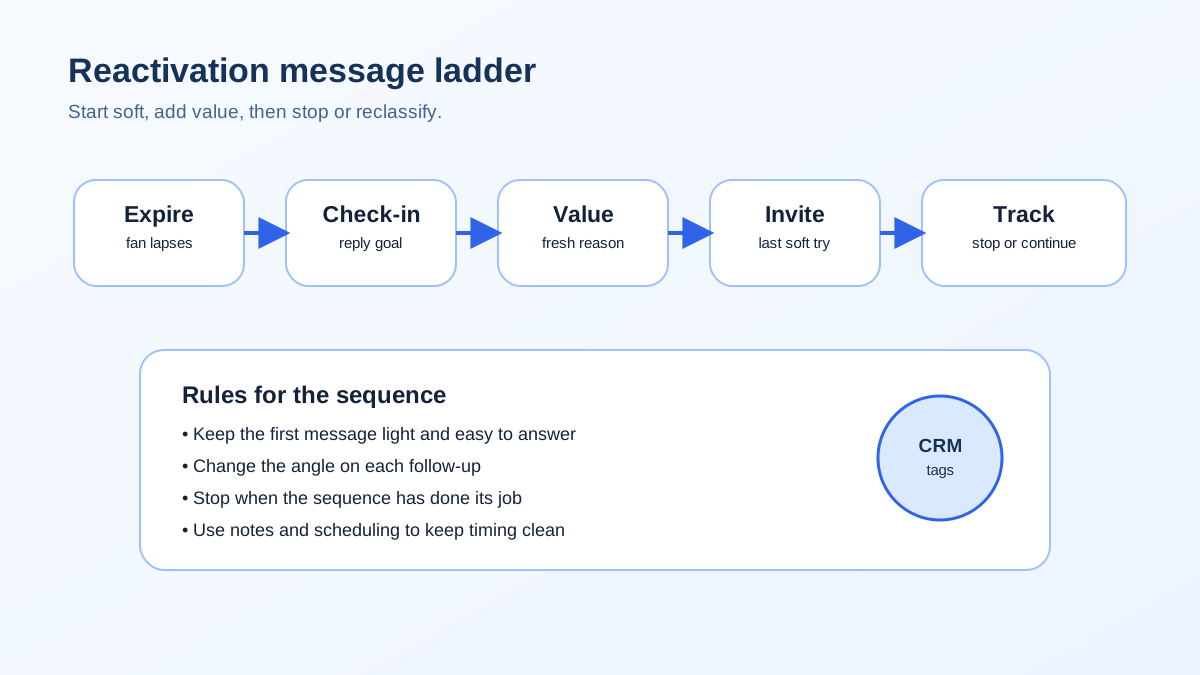
The 5-step reactivation ladder
Use one ladder for every reactivation effort. First, segment the fan by recency and value. Second, choose the timing window. Third, personalize the opener. Fourth, present a low-friction reason to reply. Fifth, stop if the fan does not engage after the planned sequence.
Step 1: Segment
Put fans into sensible buckets such as recently expired, long-expired, warm inactive, and high-value inactive. That gives your team a cleaner choice of tone and keeps a high-spend fan from receiving the same message as a low-intent one.
Step 2: Time the send
Use the fan’s last activity to choose the window. A recently expired fan might get a check-in within a day or two. A long-inactive fan needs a different approach, usually with more distance and a softer ask. The wrong timing makes even good copy feel impatient.
Step 3: Personalize the opener
Reference one detail you already know. That could be a past conversation, a favorite content type, or a simple observation that shows you are not sending a copy-paste blast. Personalization does not need to be elaborate. It just needs to be real.
Step 4: Make the next step easy
Ask one question or offer one small path forward. If the fan replies, you can then decide whether to move to a sale, a custom offer, or a warmer conversation. If they ignore the message, your sequence should still protect the page from overmessaging.
Step 5: Track the response
Track reply rate, click rate, unlock rate, and the number of messages needed before a response. That tells you whether the sequence is too short, too aggressive, or too generic. It also helps you sharpen future chat scripts.
Best timing windows
| Window | Best use | Message goal | Risk to avoid |
|---|---|---|---|
| 24 to 48 hours after expiry | Recently lapsed fans who already know the page | Get a reply or re-open the chat | Leading with a hard sale |
| 3 to 5 days after expiry | Fans who did not answer the first touch | Offer a fresh angle | Repeating the exact same copy |
| 7 to 10 days after expiry | Fans who need a stronger reason to return | Present a stronger value hook | Overexplaining or overdiscounting |
| 14 to 21 days after expiry | Longer silence windows | Test interest one last time | Dragging the sequence forever |
30 ready-to-use reactivation scripts
Keep these short. They are designed to feel human, not polished to death. Replace any bracketed detail with a real name, a known interest, or a recent reference when you have one.
Right after expiry
- Hey, I noticed your subscription just ended. Want me to send you something new this week?
- You popped into my mind today. Want a quick update on what I have been posting lately?
- I think you left right before I shared the fun part. Want a little preview of what is next?
- No pressure at all, but should I save you a spot for the next drop?
- You were around for a good moment. Want to pick up where we left off?
Three to five days later
- I have something fresh that feels more like your kind of thing. Want to see it?
- Quick check-in. Are you still into this page, or should I stop bothering you for now?
- I changed the vibe a little this week. Want the short version?
- You seemed interested before, so I thought I would say hi once more. How have you been?
- If I sent you one new set tonight, would you actually want to see it?
Seven to ten days later
- I saved something a bit more personal for people who have been away. Want me to show you?
- I thought of a better way to say hello. Want a message that is less generic and more fun?
- I have been building a new little run of content. Do you want in before I post it broadly?
- You do not have to answer, but I wanted to give you one last invite before I move on.
- If your timing is better now, I can send the good stuff first. Want that?
Fourteen to twenty-one days later
- Last ping from me, promise. If you ever want back in, I can make it easy.
- I do not want to spam you, so this is just a gentle hello before I close the loop.
- You can always come back later. If you want the page to feel fresh again, I can help with that.
- I am wrapping up older chats today. If you still want updates, just reply and I will keep you on the list.
- I have one final open invite. If now is not the time, no worries at all.
High-value reactivation
- I remembered what you liked most, and I have something in that lane again. Want first look?
- You were always one of the more interesting conversations here. Want me to send something custom?
- I can make this more personal if you want to pick up again. Should I?
- You do not have to start over from scratch. Want me to rebuild the conversation from where we left off?
- I have a higher-value option ready if you want something more exclusive than the usual posts.
Final soft close
- I am going quiet on this thread after this, but you can always come back anytime.
- No hard feelings if this is not the moment. I just wanted to make one last friendly check-in.
- I will stop here unless you reply, but I am glad you were here when you were.
- If you ever want a fresh start, send me a message and I will take it from there.
- That is my last note for now. If the page feels right later, you know where to find me.
Three practical sequences
Sequence 1: Send a brief check-in after expiry, wait a few days, then follow with one fresh angle. This keeps the first touch low-pressure and gives the second touch a different reason to answer.
Sequence 2: For a stronger inactive fan, wait longer and lead with value rather than nostalgia. A softer opening plus a clearer content hook usually performs better than a repeat of the first message.
Sequence 3: For a high-value fan, shorten the sequence but increase the relevance. Use fan memory, mention a known preference, and move quickly if they reply. That is where disciplined routing matters most.
Reactivation checklist
- Did you separate expired fans from long-inactive fans?
- Is the first message aimed at a reply, not a hard sale?
- Does the second message offer a different angle?
- Have you planned a stop point so the sequence does not drag on?
- Are you tracking which scripts work best for each segment?
How Substy helps with reactivation
Substy makes reactivation easier because the team can see who was contacted, what segment they belong to, and which note or tag should guide the next message. Fan memory keeps the sequence personal, triggers and scheduling handle the timing, and analytics show whether a sequence is worth repeating. That becomes especially useful when a team handles several creators and needs every account to follow a slightly different rule set.
If you already plan offers around subscription pricing or tailor upsells with PPV pricing, Substy can keep the reactivation path aligned with the rest of your funnel instead of treating it as a disconnected blast.
If your reactivation flow still lives in scattered notes and DMs, move it into one place so every follow-up uses the same timing, tone, and stop rule.
FAQ
Turn reactivation into a repeatable system
When reactivation is structured, you stop guessing which fan to contact, when to contact them, and how hard to push. That makes the whole inbox easier to manage and gives your team a cleaner path back to revenue.

The first message should feel easy to answer. A softer opening usually outperforms a rushed sale.
Use one message for the first touch, a different angle for the follow-up, and a stop rule for silence.