
AI vs Human OnlyFans Chatters: When Hybrid Chatting Wins
Compare AI, human, and hybrid chatters for speed, sales, compliance, and escalation so you can build the right inbox workflow.

Key Takeaways
- AI chatters are best at speed, triage, tagging, and routine replies.
- Human chatters are still stronger when the conversation is emotional, sensitive, or high value.
- Hybrid chatting wins when AI handles the first layer and humans handle the moments that require judgment.
- The real goal is not to replace people; it is to reduce wasted time while protecting conversion quality.
- Your workflow should be measured on handoff quality, reply speed, and revenue, not just on how many messages are automated.
What each chatter model is good at
The AI versus human debate is usually framed too narrowly. AI is not just a cheaper chatter, and humans are not just a premium replacement. They are different tools for different stages of the inbox. The best teams use that difference to build a system that stays fast under pressure and still feels personal when the conversation matters.
That is why the strongest agencies rarely choose only one model. They choose the lowest-friction path for each type of fan interaction. If the fan is asking a simple question, AI can respond quickly. If the fan is ready to buy, a human can fine-tune the pitch. If the fan is frustrated or emotionally engaged, a human should step in immediately.
For context on setup and policy, review the AI chatbot setup checklist and the chatbot policy guide. Those pieces help you define the boundary before you decide how much of the inbox should be machine assisted.
AI strengths
AI is strong when the task is repeatable. It can greet new fans, answer common questions, pull from approved scripts, tag intent, and keep the inbox moving when volume spikes. It is especially useful when you need speed across multiple accounts or shifts.
Human strengths
Humans are strong when nuance matters. They can read hesitation, adapt tone, recover a cold thread, and make a sale feel natural instead of scripted. They are also better at dealing with VIP fans, edge cases, and messages that need empathy or discretion.
Hybrid strengths
Hybrid is strongest when the first response is fast and the later response is contextual. That mix preserves speed without giving up conversion quality. It also makes training easier because you only need to teach AI the routine layers, not every possible conversation.
A practical comparison table
Use the table below as a decision aid. It will not tell you what to automate in every account, but it will show where each model tends to win.
| Model | Best at | Weak point | Use it when |
|---|---|---|---|
| AI chatter | Fast replies, tagging, recurring prompts, triage | Less context and weaker judgment in edge cases | You need scale, consistency, and quick first responses |
| Human chatter | Nuance, objections, emotional tone, closing | Slower and harder to scale | The thread is hot, complex, or high value |
| Hybrid chatter | Speed plus judgment | Requires routing and QA discipline | You want automation without losing sales quality |
The comparison is useful because it turns a vague debate into an operational choice. If your biggest problem is response lag, AI helps first. If your biggest problem is poor close rate, a better human or hybrid layer may be the real fix. If your biggest problem is both, hybrid is usually the right answer.
The hybrid framework that works
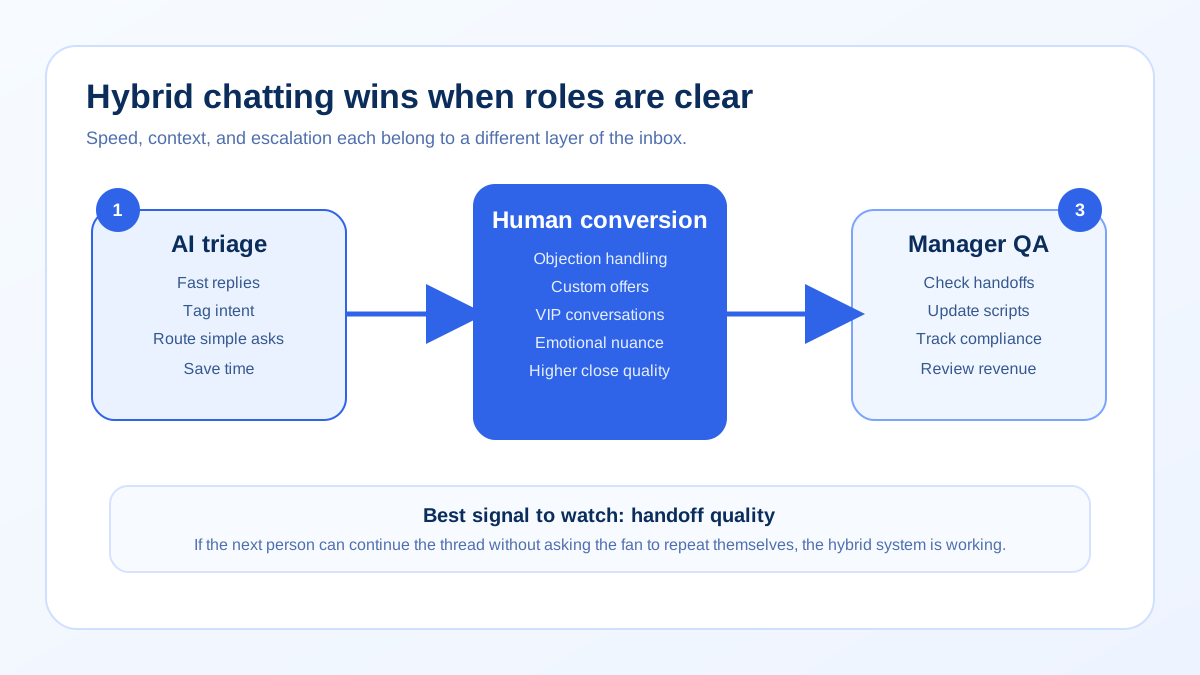
Build hybrid chatting in three layers. The first layer is AI triage. The second layer is human conversion. The third layer is manager oversight. Each layer has a different job, and each layer should know when to step aside.
Layer 1: AI triage
Use AI to greet, classify, and route. It can identify whether the fan wants pricing, content details, a custom request, or simple conversation. It can also store useful notes so the next reply does not start from zero.
Layer 2: human conversion
Use humans when the fan is ready to buy, when the message needs custom framing, or when the thread requires persuasion. This is where the value of agency chatter scripts matters. Scripts give the human a head start without forcing them into a robotic pattern.
Layer 3: manager oversight
Use a manager to review quality, catch missed handoffs, and update scripts. This matters because the stack degrades if no one checks whether AI is overused or whether humans are taking over conversations that should have been resolved faster.
That oversight layer is also where agency SOPs, retention work, and multi-account coordination fit. If you are running several creator profiles, multi-account management should decide who owns each thread and when the baton moves.
Build the AI, human, and handoff layers in one place with Substy.
Where AI should take over, and where it should stop
AI should take over when the task is repetitive, the script is approved, and the risk of misunderstanding is low. It should stop when the fan starts negotiating, the thread turns emotional, the request becomes custom, or the conversation could affect retention if handled badly.
A practical rule is to let AI do the first 60 to 70 percent of a low-risk conversation and the first 20 to 30 percent of a high-value one. The more specific the ask, the faster a human should appear. That keeps you from losing the sale to a tone mismatch or a delayed handoff.
Use AI for
- Welcome replies
- FAQ-style questions
- Tagging and note taking
- Basic PPV routing
- Reactivating old fans with approved prompts
Use humans for
- Objection handling
- Custom content requests
- VIP or whale conversations
- Complaints or sensitive threads
- Any chat that needs strategy beyond a script
If you are building the sales side of the inbox as well, keep welcome message examples and retention tactics close by. They help the first reply and the long-term relationship feel like one system.
Examples of hybrid handoff rules
Example 1: AI greets the fan, asks what they are looking for, and tags the thread as pricing interest. If the fan mentions budget, the thread moves to a human who can frame the offer without sounding canned.
Example 2: AI answers a common question about content types. If the fan asks for a custom idea, the human takes over because the thread now needs judgment and memory.
Example 3: AI handles a burst of new messages during a busy hour. When a high-value fan sends a more personal reply, the manager marks it for human follow-up so the opportunity does not stall.
The important part is not the example itself. It is the rule that triggers the handoff. Every team should know what language, intent, or spending signal causes AI to stop and a human to step in.
When not to force hybrid
Hybrid is a strong default, but it is not always the right answer. If an account is tiny and receives only a few messages a day, adding routing overhead can create more process than benefit. If the creator has a very distinct personal style, too much AI can flatten the voice and make the page feel less authentic. If the team has not written good scripts yet, AI may simply speed up weak output.
In those cases, start smaller. Use humans for the first layer, add AI only for the repetitive tasks, and expand once the team has enough data to prove the workflow helps. The point is not to install automation because it is available. The point is to use automation where it improves the conversation and protects the sale.
How to measure the hybrid stack
The hybrid model is easy to call a success when the inbox feels faster, but you need numbers to prove it. Start by tracking three levels of performance. First, watch speed metrics such as first response time and time to handoff. Second, watch conversion metrics such as unlock rate, average sale value, and revenue per conversation. Third, watch quality metrics such as repeated questions, missed handoffs, and unresolved objections.
You can simplify the review process with a small scorecard. If first response time is excellent but unlock rate drops, the AI layer may be answering too well and selling too weakly. If unlock rate is good but the average sale value is flat, the human layer may be closing too early. If both are down, the routing rule is likely wrong.
| Metric | What it tells you | What to change first |
|---|---|---|
| First response time | How quickly the inbox reacts | AI coverage and shift coverage |
| Handoff delay | How long it takes to escalate | Routing rules and approvals |
| Unlock rate | Whether the pitch works | Script quality and pricing frame |
| Revenue per conversation | Whether the stack is selling enough | Offer ladder and human close quality |
That scorecard is especially useful in agencies, because managers can compare accounts instead of guessing which inbox is healthy. It also makes training easier. A chatter does not have to know every KPI; they only need to know which metric they influence and how their replies change it.
Checklist for a cleaner hybrid inbox
- Is every approved AI reply tied to a specific use case?
- Can a human see the fan history before taking over?
- Do you know which conversation types should never be automated?
- Are your scripts updated after team review?
- Do you measure response time, conversion rate, and handoff quality together?
- Can the workflow change if the fan becomes a VIP or an unhappy customer?
- Does the team know who owns each shift and each account?
Substy for hybrid chatting
Substy is useful when you want the inbox to behave like a system instead of a loose set of chats. Use AI chat to speed up the first response, fan memory to keep context, CRM notes to track spending patterns, triggers to route the next action, and scheduling to make sure the right reply happens in the right shift.
For agencies, team management and analytics matter just as much as the script itself. You need to know whether AI is saving time, whether humans are closing more effectively, and whether any account is drifting into a pattern where replies are fast but sales are weak. That is the kind of operational view that keeps hybrid chatting honest.
Related reading
For more context, read the chatbot setup checklist, chatbot policy guidance, chat scripts for agencies, welcome message examples, retention strategy, and multi-account operations.
FAQ

Put AI on the first response, tagging, and repeatable prompts. Keep humans on sales closing, exceptions, and high-value conversations where judgment matters.
The best hybrid stack is the one that preserves context. Track whether the next person in the chain can reply without asking the fan to repeat themselves.