
Free vs Paid OnlyFans Page: Which Model Converts Better?
Free pages convert more top-of-funnel traffic while paid pages convert fewer people with higher intent and clearer revenue.
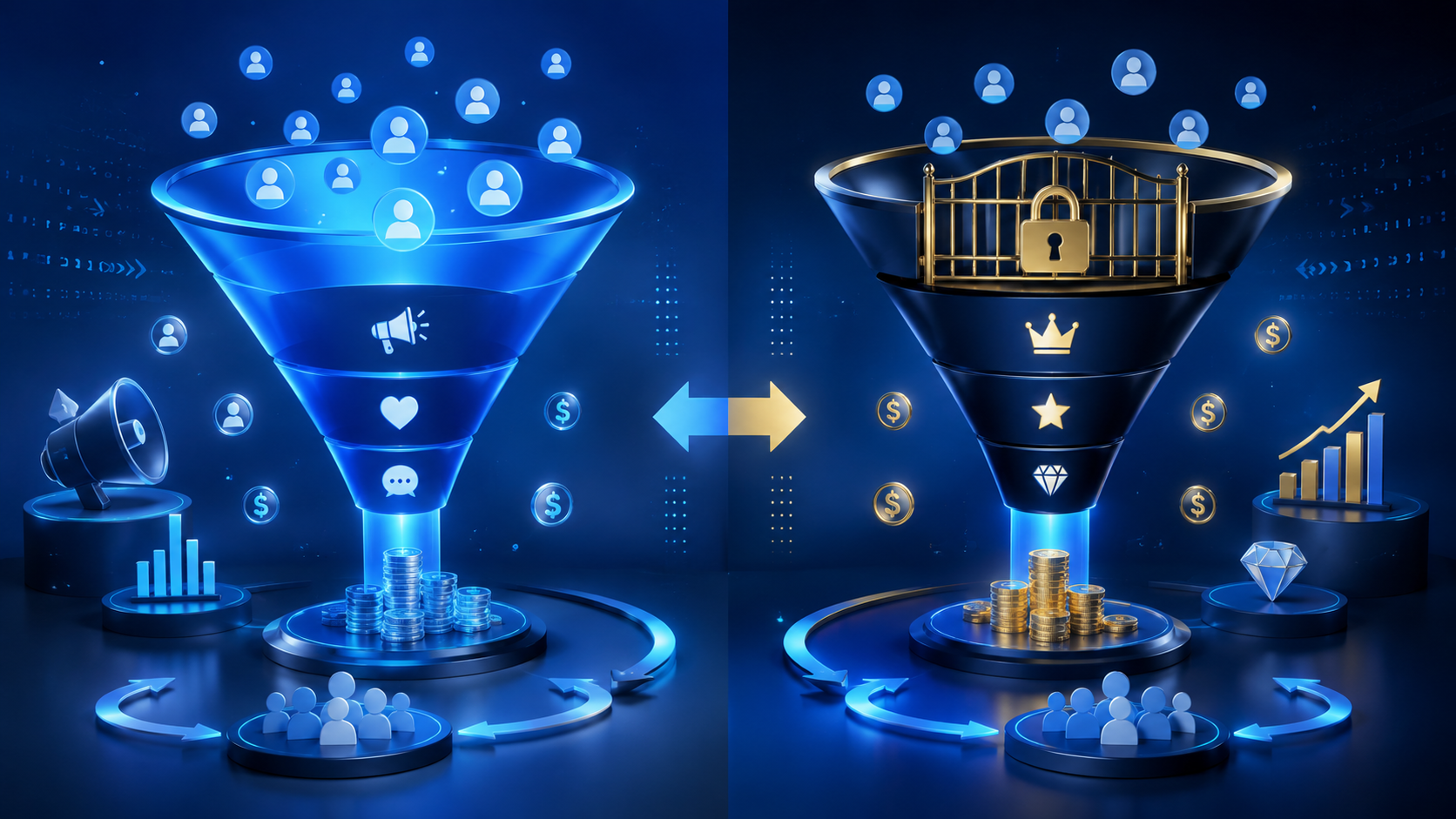
The short answer is that free pages usually convert more traffic at the door, while paid pages usually convert fewer people but with stronger intent. Which model converts better depends on the audience you can reach, the strength of the offer and the quality of your follow-up. If you are trying to choose between them, do not start with ideology. Start with the traffic source and the monetisation path. OnlyFans Support still says creators can register for free, set a monthly subscription price and start getting paid, so the platform gives you room to choose either path. The real question is which one fits your funnel.
Key Takeaways
- Free pages tend to reduce friction and can convert broader traffic into first contact more easily.
- Paid pages tend to filter for stronger intent and can create cleaner economics when the audience is already warm.
- The best model is the one that matches your traffic source, posting cadence and DM strategy.
- Hybrid pages often win when you can support both acquisition and premium conversion without confusing the audience.
- Conversion should be measured across the whole path, not just the first subscription click.
What conversion really means on OnlyFans
Conversion is not one event. It is a sequence. Someone sees the page, decides whether to join, consumes the content, decides whether to stay and then decides whether to spend again. A free page often improves the first step because the barrier to entry is low. A paid page often improves the second and third steps because the person who joins has already signalled willingness to pay.
That is why the right model depends on where your traffic comes from. If you are sending cold visitors from broad social content, a free page can make sense because you want more people in the door. If your audience already knows the creator well, a paid page can work because the subscription itself becomes part of the value proposition.
The common mistake
Creators often ask which model converts better as if there were one answer for all pages. There is not. A model that works on a high-volume traffic account can fail on a smaller niche account, and vice versa. The better question is: which model makes the next step easiest for this audience right now?

Free, paid and hybrid pages compared
| Model | Best for | Conversion strength | Revenue path | Common risk |
|---|---|---|---|---|
| Free | Cold traffic, broad discovery, strong DM sales | High entry conversion | PPV, tips and reactivation | Too many low-intent fans |
| Paid | Warm audience, premium positioning, committed fans | Higher intent per joiner | Subscription plus extras | Lower top-of-funnel volume |
| Hybrid | Teams that can separate acquisition and premium offers | Balanced | Discovery on one path, premium on another | Operational complexity |
The table does not say one model is universally superior. It says each model has a different job. Free pages trade friction for volume. Paid pages trade volume for intent. Hybrid pages try to capture both, but only if the team can keep the workflow clear.
A useful way to think about it is as a market-entry problem. Free is often better when the audience does not yet trust the creator enough to pay upfront. Paid is often better when trust already exists and the subscription itself signals value. If you pick the wrong front door, you are not merely changing revenue. You are changing the type of fan who enters, which changes the tone of the inbox, the average patience level and the content you need to keep them active.
When a free page converts better
A free page usually converts better when the creator needs more people to see the content before they commit. That is common when traffic is broad, when the creator is building awareness from scratch or when the page makes most of its money in private messages. The free entry point lowers hesitation, which can be a serious advantage if the audience is unfamiliar with the brand.
Free pages also work well when the creator or agency has a strong follow-up system. A page with good welcome messages, fast replies and disciplined PPV pricing can turn a large stream of low-friction joins into a working sales pipeline. If the team is slow or inconsistent, though, the free model can leak value through churn and low spend.
Best indicators for a free page
Use a free page when your audience is wide, your top-of-funnel content is frequent and your team is ready to convert curiosity into conversation. It is often the better fit if you have enough volume to keep the inbox active and enough discipline to avoid letting the page become a dead-end of casual signups.
When a paid page converts better
A paid page usually converts better when the traffic is warmer and the creator already has a clear reason to charge for access. That can be a stronger personal brand, a more exclusive offer, a niche that rewards intimacy or a fan base that already expects premium treatment. In that situation, the paid wall is not a barrier. It is a signal.
Paid pages also suit creators who want a cleaner relationship with the audience. The joiner has made a more deliberate choice, which can reduce tire kickers. The tradeoff is that fewer people will enter, so the page needs enough reach or enough repeat value to justify the lower top-of-funnel conversion. A paid page with weak content cadence will not fix itself with price alone. That is why subscription pricing must always be matched with a real promise of value.
Best indicators for a paid page
Use a paid page when your traffic is warm, your content schedule is reliable and your positioning is specific enough to justify the gate. If the creator is already receiving direct requests, repeat interest or strong social loyalty, the paid model may outperform because it filters for commitment instead of volume.
When a hybrid page wins
Hybrid pages often win when the agency or creator can operate with enough discipline to separate discovery from premium monetisation. A free page can act as the funnel top, while a paid page or premium path can serve the fans who want deeper access. This is effective when the workflow is organised and the team knows exactly which message belongs to which audience segment.
The risk is complexity. If the creator cannot keep the offers distinct, fans get confused and conversion drops. Hybrid works only when the page architecture is clear. That means the creator has a clean promise, a defined follow-up path and enough operational support to maintain both lanes without turning the account into a mess.
A hybrid page should only exist when the team can separate discovery from premium access with real discipline. If those lanes blur, fans assume the page is inconsistent and conversion falls because the offer is harder to understand. Clarity is a conversion tool, not a branding preference.
- How to retain OnlyFans subscribers
- OnlyFans chatter scripts for agencies
- OnlyFans AI chatbot setup checklist
- Does OnlyFans allow chatbots
- OnlyFans PPV pricing guide
A decision framework for choosing the model
Use the three-question framework below before you launch or change direction.
- How warm is the traffic? Cold traffic generally needs less friction. Warm traffic can support a stronger gate.
- How will the page monetise after entry? If the real money is in DMs and PPV, free may be the better front door. If the value is in premium access, paid may be cleaner.
- Can the team support the follow-up? A page without response discipline will struggle regardless of price structure.
If two answers point toward one model, start there. If the answers split, test both carefully instead of guessing. The correct model is the one that matches the audience you can actually reach, not the audience you wish you had.
That testing should be simple. Change the front door, keep the audience and content effort as steady as possible, and compare joins, repeat spend and retention over a fair period. When you change too many variables at once, you end up measuring your own confusion instead of the page model.
A clean test period also helps you notice secondary effects. A free page may bring more messages but lower patience. A paid page may bring fewer messages but better quality. The winning model is the one that produces the best combination of speed, spend and retention for your actual audience, not the one that sounds better in theory.
Checklist before you decide
- Identify whether your traffic is cold, warm or mixed.
- Write the offer in one sentence before you pick a price model.
- Make sure your welcome message and follow-up flow are ready.
- Decide how PPV, tips and renewals fit the page economics.
- Track more than subscriptions so you can see true conversion.
- Review churn after the first month and adjust only one lever at a time.
How Substy helps either model convert better
Substy helps because both models depend on execution. For a free page, AI chat can keep the inbox moving, fan memory can keep the tone consistent and triggers can make follow-up more reliable. For a paid page, the same tools help maintain the premium feel while reducing the delay between interest and response. In both cases, the team gets a better view of the conversation and a cleaner handoff to the next person.
That matters most in the transition from first contact to first sale. If the welcome flow is weak, the free model leaks. If the premium positioning is weak, the paid model stalls. Substy gives you the operational layer to keep those transitions tight without forcing the team to improvise every time.
Put this workflow into practice
If you are choosing between free and paid, build both the page and the workflow with the same discipline. Open Substy and set up the follow-up system before you change the price model.
Open SubstyFAQ

If your traffic is cold, a free entry point often lowers friction. If your traffic is already warm, a paid page can create stronger commitment from the start.
Do not judge conversion only by subscriptions. Track replies, PPV opens, repeat purchases and renewals so you can see the real economics of each page model.