OnlyFans Tracking Links - How to Measure Every Traffic Source
The complete guide to OnlyFans tracking links - how to set them up, what metrics actually matter, and how to use traffic source data to make smarter revenue decisions for your agency.
Most OnlyFans agencies invest real time and money in traffic. Reddit posts, TikTok accounts, Telegram promotions, Instagram teasers, paid shoutouts — the channels stack up fast. And then at the end of the month, the revenue number either went up or it didn't, and nobody knows exactly why.
That's the problem tracking links solve. They're the layer between your traffic efforts and your revenue data that tells you not just where your subscribers came from, but how much each of them actually spent. Without that data, traffic investment is guesswork. With it, you can double down on what works and cut what doesn't — with actual numbers backing the decision.
What Are OnlyFans Tracking Links ?
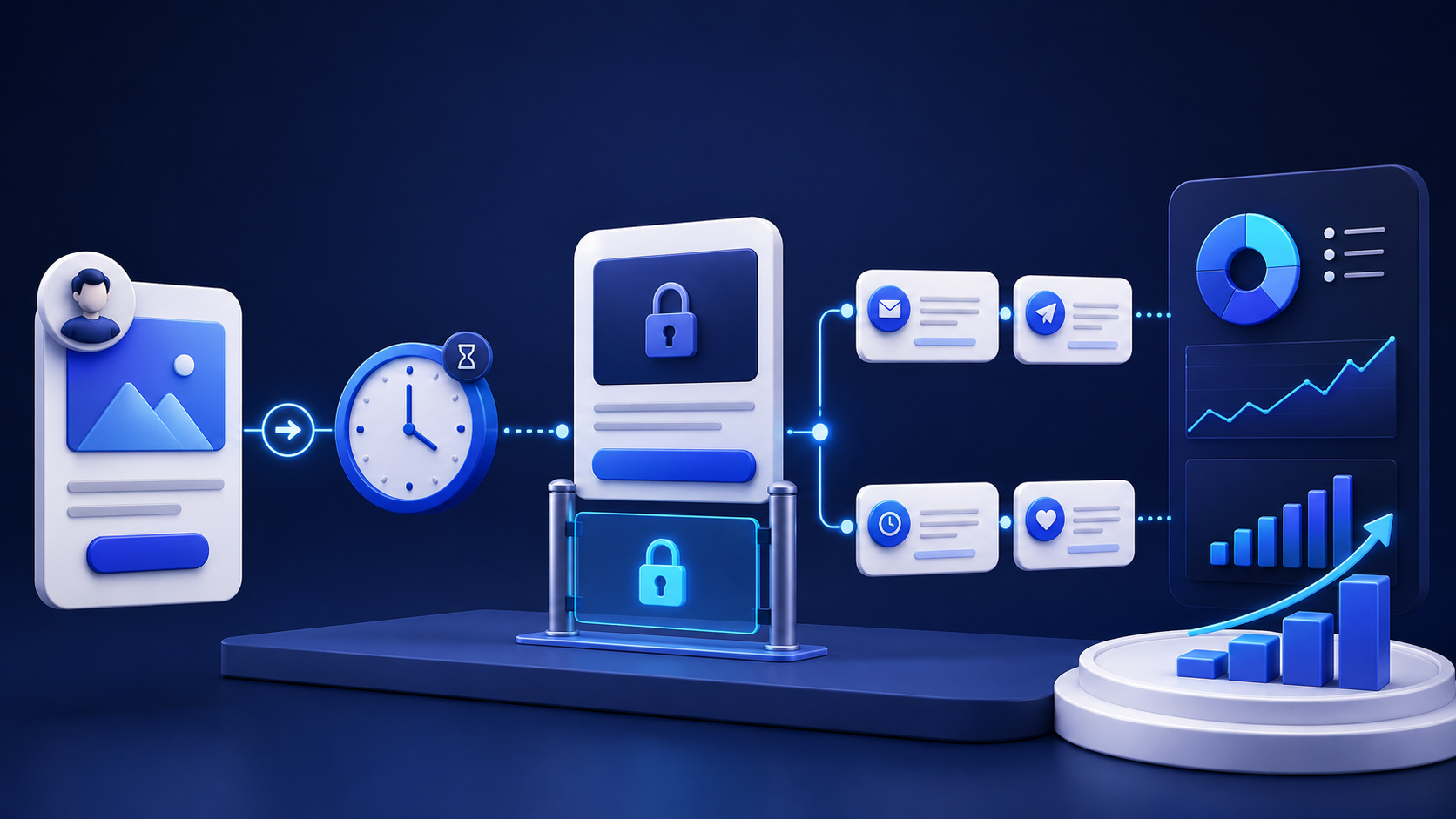
A tracking link is a unique URL assigned to a specific traffic source that records which subscribers came from that source and what they did after subscribing. Instead of pointing all your traffic to the same creator profile link, you create a separate link for each channel — one for your Reddit posts, one for your TikTok bio, one for your Telegram group, one for each paid shoutout.
When a fan subscribes using a tracking link, the system records the source. Every time that fan spends money — PPV purchase, tip, subscription renewal — the revenue is attributed to the channel that drove them. Over time, this builds a clear picture of which traffic sources generate subscribers who actually spend, and which generate follows that never convert to revenue.
The difference between the two is enormous in practice. A Reddit thread might drive 40 new subscribers in a week while a paid shoutout drives 15. Without tracking, you'd probably conclude the Reddit thread was more valuable. With tracking, you might discover that the Reddit subscribers have a 30-day LTV of $8 each while the shoutout subscribers average $45 — at which point the math reverses completely.
Why Most Agencies Still Don't Use Tracking Links Properly
The barrier to using tracking links isn't technical difficulty. Most OnlyFans CRM platforms generate them in a few clicks. The barrier is that most agencies never establish the habit of creating a unique link for every source before running any traffic, and by the time they think about it, months of untracked data are already gone.
The second issue is that agencies track link clicks but not fan LTV. Knowing how many clicks a link generated is almost meaningless — what matters is how much the subscribers from that link spent over 30, 60, and 90 days. A link with 200 clicks and 5 subscribers who spent $400 collectively outperforms a link with 500 clicks and 30 subscribers who spent $90 collectively. You can only see this if your tracking system connects source data to spending data per fan, which requires a CRM, not just a click counter.
The third issue is inconsistent application. Agencies that create tracking links for some channels but not others end up with partial data that's actually worse than no data — it creates false confidence that they understand their traffic when they're only seeing part of the picture.
How to Set Up Tracking Links Correctly
The setup is simple but the discipline matters. Every traffic source, without exception, gets its own tracking link before you run any traffic to it.
The naming convention matters more than most agencies initially realize. A link called "link1" tells you nothing six months later. A link called "reddit-r-onlyfansadvice-march" tells you exactly where it was used and when. Standardize your naming before you start, because renaming links retroactively is painful and the history becomes ambiguous.
The minimum granularity most agencies should track is by platform and by specific channel within that platform. Reddit as a whole is one data point. But r/onlyfansadvice and r/CreatorServices are different audiences with different conversion profiles — knowing that one outperforms the other at LTV tells you where to focus your Reddit effort specifically. Similarly, TikTok organic and a paid TikTok shoutout should have separate links even though they're both TikTok.
What to Track - The Metrics That Matter
The raw numbers that tracking links generate are only useful if you're measuring the right things. Clicks and subscriber counts are the surface layer. The metrics that drive decisions are deeper.
Conversion rate from click to subscriber tells you whether your traffic channel is reaching the right audience and whether your profile and bio are converting effectively. A traffic source with a strong conversion rate but low LTV might be sending curious fans who aren't buyers. A source with a lower conversion rate but high LTV is sending more qualified traffic even if the raw volume looks smaller.
Cost per subscriber is essential for any paid traffic. If you're spending $200 on a shoutout and getting 8 subscribers, your cost per subscriber is $25. Whether that's worth it depends entirely on what those 8 subscribers spend over 90 days. This calculation is impossible without LTV data per source, which is why click-only tracking is insufficient for any real budget decision.
30-day and 90-day LTV by source is the metric that fundamentally changes how agencies allocate their traffic investment. Most agencies that implement proper LTV tracking by source discover they have one or two channels generating 70% or more of their real revenue value, and several channels that look productive on the surface but generate minimal actual spend. Cutting the underperformers and reinvesting in the top channels is usually the single highest-ROI SEO and traffic optimization an agency can make. This connects directly to the fan management framework because you're essentially doing attribution analysis on your subscriber base.
Setting Up Tracking Links by Platform
Each traffic channel has its own practical setup considerations.
For Reddit, create one link per subreddit where you post regularly. r/onlyfansadvice, r/CreatorServices, and r/onlyfans_creators all have different audiences — the granularity lets you identify which communities are actually driving revenue versus which are driving subscribers who never spend. Given how central Reddit is to most OnlyFans traffic strategies, this is the single highest-value tracking setup most agencies can make. The complete guide to promoting OnlyFans on Reddit covers which subreddits to prioritize, and knowing the LTV data per subreddit makes that prioritization data-driven rather than intuitive.
For TikTok and Instagram, separate organic content from any paid promotion or collaborations. TikTok organic drives a very different subscriber profile than a paid collaboration with another creator, and the LTV difference is often significant. Treating them as a single channel hides that difference.
For Telegram and WhatsApp communities, each group or channel deserves its own link. The quality of subscribers from a highly active, niche-specific Telegram group is consistently different from a large general-audience group, and you can't optimize your community presence without knowing which specific groups are worth your time.
For paid shoutouts, every single shoutout gets a unique link with the creator's name and date in the naming convention. Shoutouts are often the highest-cost traffic source agencies run, and knowing the ROI per creator is essential before you re-book. A shoutout that cost $500 and generated fans with $1,200 in 90-day LTV is worth repeating. One that generated $180 is not.
How Tracking Links Connect to the Broader Agency Operation
Tracking link data doesn't exist in isolation — it connects to every other part of how a professional agency operates.
It informs fan management because knowing a fan's acquisition source tells you something about their likely spending profile before they've made a single purchase. Fans from high-LTV sources can be treated more generously in early engagement sequences because the data suggests they're more likely to convert. This is one of the more sophisticated applications of tracking data that separates agencies running truly data-driven operations from those using tracking links only as a reporting tool.
It informs the PPV strategy because source data adds a dimension to fan segmentation. A fan who came from a high-converting paid shoutout and is in the Newbie classification should receive a higher first-PPV price point than a fan from a low-LTV organic source, because the source data suggests different spending potential.
It informs hiring decisions because traffic ROI determines how much revenue is available to invest in the chat team. An agency that discovers its Telegram traffic generates 3x the LTV of its Reddit traffic has the data to justify investing in Telegram community management — and the revenue to fund a better chatter for those higher-value subscribers.
Common Mistakes That Undermine Tracking
A few patterns consistently destroy the value of tracking link data even in agencies that have put the system in place.
Using the same link across multiple channels is the most common error and completely defeats the purpose. If your bio link is used on TikTok, Instagram, and three Reddit posts simultaneously, all you know is that some traffic converted — you have no idea which source was responsible.
Not tracking consistently from the start means you build a partial dataset that creates false conclusions. If you track Reddit but not TikTok for two months, and then compare the two channels, Reddit will look like it generates more revenue simply because you have more data for it.
Measuring only click-through and not LTV means you're optimizing for the wrong metric. A link with 500 clicks and 20 subscribers who never spend is not a better link than one with 80 clicks and 8 subscribers who spend $50 each. The only number that ultimately matters is revenue per click, which requires LTV data connected to source data.
Forgetting to create links before launching traffic means you miss the early subscriber data for any new channel. By the time you realize you should have a tracking link for a new Reddit post that's generating traffic, the first wave of subscribers has already come through unattributed.
FAQ - OnlyFans Tracking Links
What are tracking links on OnlyFans ?
Tracking links are unique URLs assigned to specific traffic sources that record which subscribers came from each source and how much they spent. They connect traffic data to revenue data so agencies can measure the real ROI of each channel rather than just counting clicks or subscriber numbers.
How do you create tracking links for OnlyFans ?
Most OnlyFans CRM platforms generate tracking links directly within their dashboard. In Substy, you create a new tracking link, assign it a name that identifies the source, and use that specific URL anywhere you're driving traffic from that source. The CRM then attributes all spending from subscribers who used that link to the source automatically.
What is the most important metric to track for OnlyFans traffic ?
Fan lifetime value by acquisition source is the most important metric. It tells you not just how many subscribers a channel drove, but how much those subscribers actually spent over 30, 60, and 90 days. This is the metric that makes traffic investment decisions rational and prevents agencies from over-investing in channels that look productive but generate low-value subscribers.
Do tracking links work on Fanvue too ?
Yes. The same tracking link framework applies to Fanvue. Agencies managing both platforms benefit from a unified system that tracks subscriber LTV across both — covered in more detail in the guide to scaling a Fanvue agency.
How many tracking links should an agency have ?
One per active traffic source, with enough granularity to make useful comparisons. Most agencies managing three to five accounts across five to ten channels maintain 20 to 40 active tracking links. The number matters less than the consistency — every source that's actively driving traffic should have its own link.
Can tracking links be used for paid traffic campaigns ?
Yes, and it's especially important for paid traffic where the cost per acquisition is known. Connecting the cost of a paid shoutout or collaboration to the LTV of the subscribers it generated gives you a true ROI figure that tells you whether to repeat the investment or cut it.
The Bottom Line
Tracking links are the infrastructure that turns traffic effort into intelligence. Without them, agencies are running campaigns based on instinct and hoping the revenue trend tells them something useful. With them, every traffic decision has a data foundation — which channels to scale, which to cut, and how much to invest in each one.
The setup is simple. The discipline of using a unique link for every source, consistently, from the beginning, is what most agencies fail to maintain. The ones that do are making traffic decisions with a clarity that gives them a durable competitive advantage.
Substy includes tracking link creation and LTV attribution natively — built into the same dashboard as fan management, AI chat, and chatter analytics. If you're building an agency that makes data-driven decisions, it's worth starting there.