
OnlyFans Creator Onboarding Checklist for Agencies: First 30 Days
Use a 30-day onboarding checklist to launch new OnlyFans creators with clear access, voice, workflow and review rules.

OnlyFans creator onboarding should not be a loose handoff. The first 30 days need a clear sequence so the creator, manager, chatter, and content lead all know what happens first, what gets approved, and what counts as ready. A good onboarding checklist reduces avoidable mistakes, speeds up the first publishing cycle, and prevents the team from improvising the same answers twice.
This article gives agencies a practical 30-day onboarding plan for a new creator or a newly managed account. You will see what to complete before day one, what to lock down in week one, what to refine by week two, and how to finish the month with a stable operating rhythm.
Key Takeaways
- Onboarding is a process design problem, not a paperwork problem.
- The first 30 days should define access, tone, boundaries, posting cadence, and escalation rules.
- Use a day-by-day handoff so creators do not answer the same question in three different places.
- Pair the process with OnlyFans welcome message examples and OnlyFans chatter scripts for agencies so the first messages are consistent.
- Use managing multiple OnlyFans accounts as an agency as the operations reference when one team handles several accounts.
The First 30 Days at a Glance
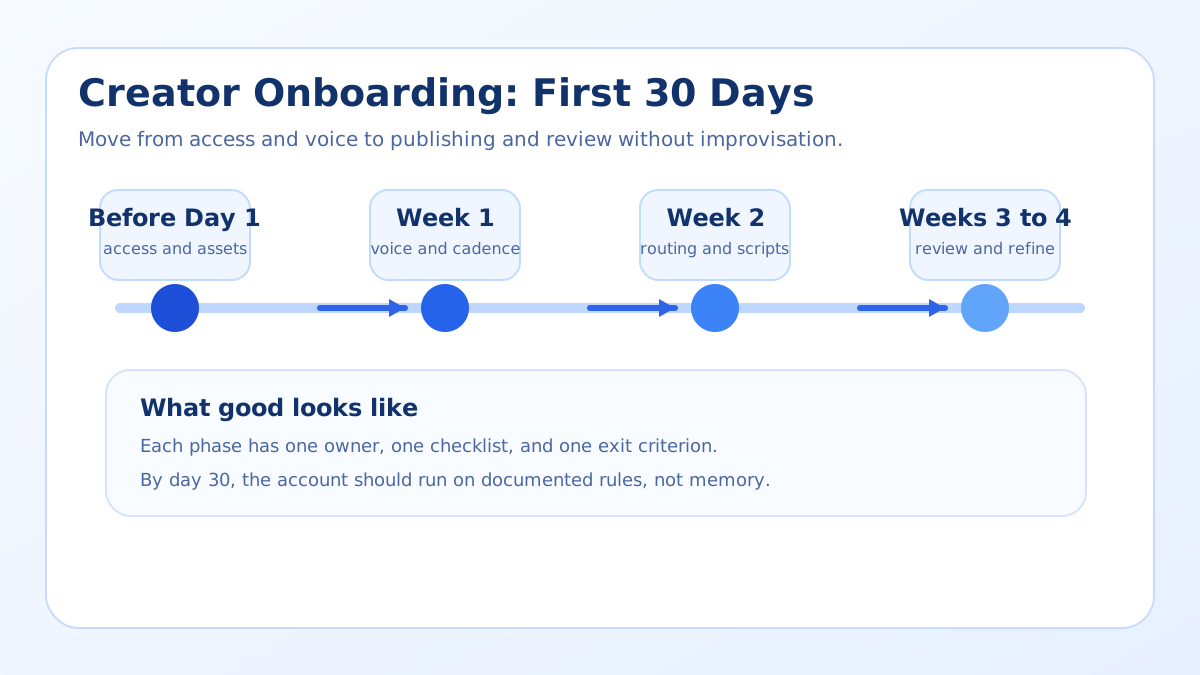
The best onboarding checklists map work to time. That makes it obvious who owns each step and when the account should be ready for the next phase. Use the table below as the backbone of the process.
| Phase | Primary goal | Owner | Exit criterion |
|---|---|---|---|
| Before day 1 | Secure access, define rules, and collect brand assets. | Agency owner or onboarding lead. | Everyone knows the setup and the account is ready to work. |
| Days 1 to 7 | Finalize tone, welcome flow, posting rhythm, and handoff rules. | Creator manager and chatter lead. | The first content and inbox workflows are live. |
| Week 2 | Refine scripts, labels, and segmentation. | Operations lead. | The team can route fans without asking basic questions. |
| Weeks 3 to 4 | Review performance, fix bottlenecks, and document the real workflow. | Agency manager and creator. | A stable operating rhythm with documented rules. |
The Practical Onboarding Framework
The cleanest way to onboard a creator is to treat the first month as a sequence of four decisions: what access exists, what the brand sounds like, how the inbox works, and how the account will be reviewed. That sequence keeps people from making decisions too early. It also makes it much easier to spot where the process broke down.
Days 0 to 2: lock access and expectations
Start with permissions, account ownership, security, and a plain-language summary of what the agency will handle. Collect the essential assets: bio copy, profile image options, content references, tone examples, and any special boundaries. If the team manages more than one page, standardize the handoff against the multi-account agency guide so permissions and responsibilities are not improvised.
Days 3 to 7: define the creator voice
Now decide how the account should sound in DMs, welcome messages, PPV pitches, and public captions. If the creator already has a style, keep it. If not, build one from a few reference examples and write it down. This is where welcome message examples are useful because they show how to greet a fan without sounding generic. The goal is not to write one perfect message. The goal is to create a repeatable tone.
Week 2: build the inbox and content operating rules
By the second week, the team should know how to tag fans, when to escalate, which script to use for common scenarios, and what happens when a fan asks for something unusual. Connect the inbox rules to the same response logic used in the chatter scripts guide so the team does not make up new phrasing every time. If the creator uses automation or AI-assisted replies, document where human review still happens.
Weeks 3 to 4: refine based on real behavior
The final week is where onboarding becomes operational. Review what fans asked, what messages converted, where the creator needed approval, and where the team lost time. Then update the checklist, not just the conversation. If the account has to retain subscribers after the first wave of attention, keep the workflow aligned with retention guidance so the team builds a long-term path instead of a one-week launch push.
What Every First 30 Days Checklist Must Include
Your checklist should cover the same operational categories every time. If a category is missing, the account will drift and the team will fill the gap with assumptions.
- Access and security: who owns logins, who can change settings, and how approvals work.
- Brand voice: examples, banned phrases, preferred tone, and escalation language.
- Content plan: what gets posted, when it gets posted, and how approvals happen.
- Inbox routing: who replies to which segment and when the handoff occurs.
- Offer flow: which content or PPV offers are used for new fans, spenders, and dormant fans.
- Reporting: which metrics are reviewed daily, weekly, and monthly.
- Issue handling: what happens when a fan becomes difficult, a message is missed, or a creator changes direction.
If you need a clear starting point for automated greetings or routing, the AI chatbot setup checklist is a useful companion because it forces the human and automated steps into one system. If the platform policy or creator preference limits automation, keep the same checklist but route the messages manually.
Examples of Good and Bad Onboarding
Good onboarding example: the agency collects assets before day one, writes the welcome flow in a shared document, assigns one owner for inbox decisions, and checks the first week of messages for tone consistency. The creator sees fewer repeat questions and the team learns from real replies, not guesses.
Bad onboarding example: the account is opened quickly, the team starts posting before the tone is defined, no one knows who answers sensitive DMs, and the first week is spent correcting avoidable mistakes. That kind of launch does not save time. It just pushes the cleanup into the busiest part of the month.
Another common pattern appears when a creator joins an agency that already manages multiple pages. If there is no onboarding checklist, the new account gets treated like an old one and the setup misses the details that matter. That is why the operating rules should be written as if another manager has to take over tomorrow.
Common Onboarding Mistakes
One of the most common failures is collecting assets but not translating them into decisions. The team has the information, but no one has written the actual rule. Another failure is treating the creator as the process owner; that can work for a solo page but breaks as soon as there are multiple shifts. A third failure is launching with a welcome message but no follow-up plan, which means the first fan touchpoint is strong and the rest of the journey is improvised.
Use the first month to remove friction in the places that create repeat questions. If a chatter keeps asking how to answer the same type of fan, the onboarding notes are incomplete. If the creator keeps being pinged for simple approvals, the escalation path is too vague. The checklist should keep collapsing those questions into written answers.
What a finished first month should leave behind
By day 30, the agency should have one shared operating space with the creator voice, inbox rules, posting cadence, offer map, escalation rules, and reporting template. The team should also know which part of the workflow will be automated and which part will stay human. That clarity matters even when the account is small, because the process you document on day 30 becomes the process you scale later.
A useful check is to ask whether a stranger could take over the account with the document alone. If the answer is no, the onboarding packet still depends too much on verbal context. A strong 30-day process leaves behind notes that reduce training time for the next hire and give the creator confidence that the agency is not improvising behind the scenes.
Centralize your creator onboarding
If you want to standardize the first month across creators, Open Substy and keep the onboarding notes, inbox rules, and handoff decisions in one place before the account goes live.
Checklist for Agency Onboarding
- Confirm ownership, permissions, and backup access.
- Collect content references, bio inputs, and profile assets.
- Define the creator voice for welcome, chat, and PPV messaging.
- Write a clear escalation path for sensitive messages.
- Set inbox response rules and fan segment labels.
- Prepare the first posting schedule and approval timeline.
- Document the first PPV and retention pathways.
- Review the first week of performance and update the checklist.
When your team needs a consistent relationship layer, keep the welcome and follow-up flows tied to welcome message examples, the chatbot policy guide, and the retention plan so the handoff stays compliant with the operating rules you already set.
How Substy Helps With Onboarding
Substy is useful during onboarding because it gives the team a shared place for CRM context, fan memory, AI chat support, PPV scripts, scheduling, and team management. That matters in the first 30 days because most onboarding mistakes come from information being scattered across chat threads, spreadsheets, and private notes. When the same information sits in one operating layer, the team can keep the creator voice stable while still moving quickly.
Use the CRM to store creator preferences and account-specific notes, fan memory to preserve tone across handoffs, and scheduling to keep the first publishing rhythm predictable. If you are onboarding a creator who may later use AI-supported replies, the policy and workflow should be aligned from the start rather than added after the account is already active.
FAQ
Build a consistent onboarding workflow
If you want a cleaner onboarding flow for each new creator, Open Substy and keep the account setup, scripts, and approvals in a single workflow from day one.
Open Substy
Access, voice, and handoff rules should be written before the first post or inbox reply goes live.
The first month should end with a refined process, not just a live account and a few scattered notes.