
How Much Do Male Creators Make on OnlyFans? Realistic Revenue Models for 2026
Male OnlyFans income is driven by traffic, conversion, retention and offer design, not one universal average.

Male creators on OnlyFans can make anything from side income to serious monthly revenue, but the honest answer is that there is no useful universal average. Income depends on the size and quality of the audience, the strength of the offer, how well the page converts, how often fans buy extras and how much work goes into retention. If you want a realistic 2026 number, start with a model, not a headline. The model tells you what has to happen for the income to exist.
Key Takeaways
- There is no single number that describes what male creators make on OnlyFans.
- The four inputs that matter most are traffic, conversion, average spend and retention.
- Male creators usually improve revenue by increasing trust and follow-up quality, not by guessing a better price.
- A free page, a paid page and a hybrid page can all work if the funnel matches the audience.
- The safest way to forecast income is to build conservative, base and strong scenarios and compare them to your real activity.
What actually determines income
The platform itself is only part of the equation. OnlyFans Support still points creators to its Help Center and says creators can register for free, set a monthly subscription price and start getting paid. That is the setup. The real question is what you do with the audience after they arrive.
For male creators, income usually comes from a mix of subscription revenue, paid messages, custom offers and renewals. Some pages rely on a low-friction front door and earn most of their money later in DMs. Others use a paid page and ask the subscriber to commit earlier. Neither model is automatically better. What matters is whether the page can convert the kind of traffic it receives.
The mistake most forecasts make
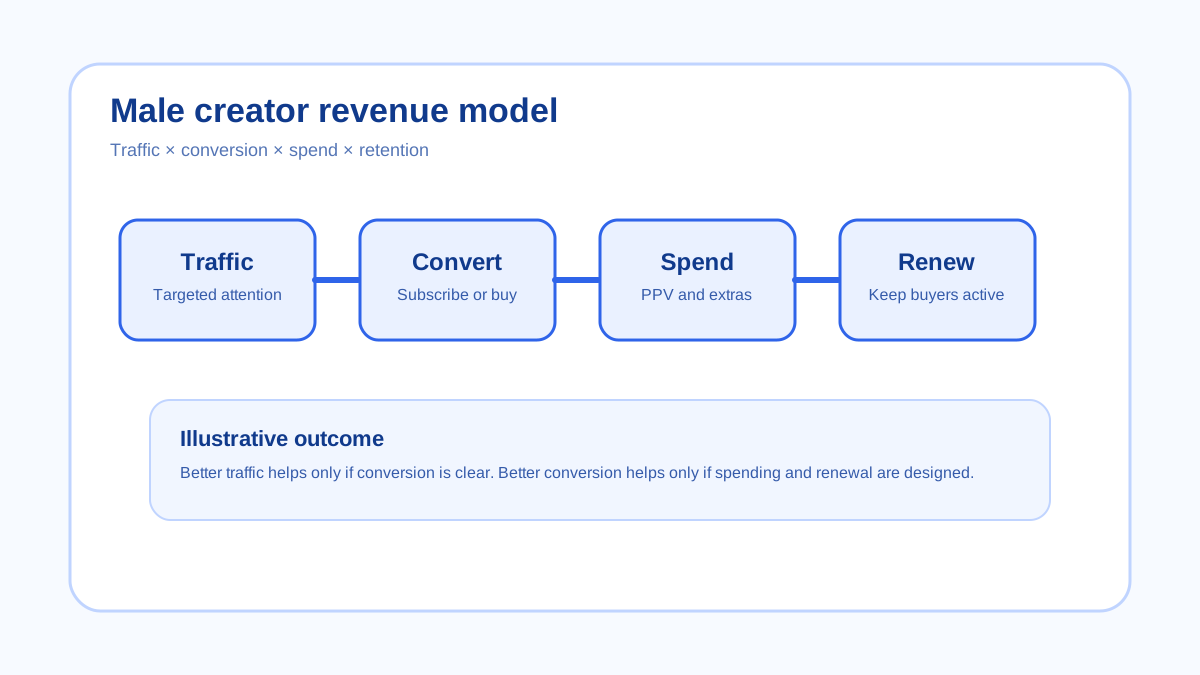
The common mistake is to start with a number people want to hear. That number is usually detached from traffic, engagement or retention. A better approach is to ask four questions: how many people will see the page, how many will join, how many will buy something beyond the subscription, and how long will they stay active. If you cannot answer those questions, any income estimate is decorative.
A realistic revenue model for 2026
The table below is illustrative, not predictive. It shows how income can change when the funnel improves. Use it to think in ratios, not in promises.
| Scenario | Monthly traffic | Subscription conversion | Average extra spend | Illustrative monthly gross |
|---|---|---|---|---|
| Conservative | 5,000 targeted visitors | 1.0% | $8 per buyer | $450 to $900 |
| Base | 15,000 targeted visitors | 1.5% | $15 per buyer | $2,000 to $4,000 |
| Strong | 40,000 targeted visitors | 2.5% | $25 per buyer | $8,000 to $15,000+ |
Those ranges can move quickly. A creator with a smaller audience can outperform a bigger account if the fan relationship is warmer and the offer is clearer. A creator with larger traffic but weak follow-up can underperform badly. That is why a simple follower count never tells the whole story.
The four numbers that matter most
1. Traffic quality
Traffic quality is more important than raw traffic volume. Ten thousand curious viewers are often less valuable than one thousand viewers who already understand the creator brand. Male creators who win usually build an audience around a clear persona, fitness angle, dominant niche, humor style or premium interaction promise. That makes the first conversion easier.
2. Conversion rate
Conversion rate is the share of visitors who subscribe or buy after they land on the page. A free page can improve top-of-funnel conversion because there is less friction. A paid page can improve intent because the buyer self-selects earlier. The right answer depends on whether your traffic is broad or warm.
3. Average spend per fan
Average spend includes the subscription and the extras. In a lot of real accounts, the subscription is only the entry point. The real upside comes from follow-up, PPV and custom offers. That is why PPV pricing matters as much as the monthly fee. It is also why welcome messages and chatter scripts are not cosmetic. They shape whether the fan buys again.
4. Retention
Retention is what turns a decent month into a dependable one. If churn is high, every month starts from zero. If retention is healthy, each month compounds on the last. That is why subscriber retention is a revenue lever, not a support topic.
How male creators usually build revenue
Most successful male pages do not rely on one tactic. They stack several. A creator might attract interest through social content, convert on a free page, push warm fans into DMs, sell PPV when the conversation is active and keep the base alive with consistent posting. Another creator might use a paid page and sell premium interactions to a smaller, more committed audience. Both paths can work if the page has a clear proposition.
The creators who do best usually treat the page like a sales system. They build one obvious reason to subscribe, one obvious reason to respond and one obvious reason to buy again. That can be a fitness angle, a personality-led page, a playful niche or a premium companionship style, but the structure matters more than the label. The audience must understand what is special about the page within a few seconds.
That is also why many forecasts undercount repeat purchases. A fan who buys once is not the same as a fan who stays in the conversation. If the content and messaging create a reason to return, monthly gross can grow without needing a dramatic traffic jump.
This is where audience fit matters. If the creator has strong top-of-funnel reach, a free page may convert more efficiently because the fan can enter without hesitation. If the creator has a loyal audience already asking for access, a paid page may create stronger commitment and cleaner economics. If both are true, a hybrid structure can outperform either alone.
Examples of realistic revenue paths
Example one: a fitness creator with social reach. He uses social platforms to send traffic to a free page, then monetises with a mix of PPV and direct messages. The weakness of this model is churn if the follow-up is slow. The strength is volume and low friction.
Example two: a niche persona creator with less traffic but a sharper angle. He charges for access, posts consistently and sells a premium sense of exclusivity. The weakness is lower top-of-funnel volume. The strength is higher intent and often better retention.
Example three: an agency-managed account. The team does not rely on one big launch. It segments fans, responds faster, sends better offers and re-engages dormant buyers. The economics improve because the account is managed like a sales system instead of a content dump.
That third example is the one many solo creators eventually copy. The moment the page has enough activity, the job stops being only about publishing content and becomes about managing response quality, follow-up timing and offer sequencing. A creator who understands that shift can add revenue without necessarily adding more posting volume.
- OnlyFans content ideas for men
- Can men succeed on OnlyFans
- OnlyFans subscription pricing guide
- OnlyFans PPV pricing guide
- How to retain OnlyFans subscribers
A practical framework for forecasting income
Use the 4R framework: reach, response, revenue per fan and renewal. It is simple enough to run on a whiteboard and strong enough to keep you honest.
- Reach: How many targeted people do you put in front of the page each month?
- Response: What share of them subscribe, reply or buy?
- Revenue per fan: How much does the average buyer generate after the first touch?
- Renewal: How many keep paying, buying or re-engaging in the next cycle?
When one of those numbers is weak, do not jump straight to a higher subscription price. First fix the weak stage. More traffic helps only if the page can convert. More conversion helps only if the follow-up exists. More follow-up helps only if the offer is clear. That is the order.
If you improve the weakest stage first, the rest of the model becomes easier to trust and easier to repeat.
That sequence also gives you a cleaner way to improve month over month. If traffic is flat, you work on reach. If traffic is strong but joins are weak, you work on the page and opening offer. If joins are fine but spend is low, you work on messaging and PPV. If spend is fine but churn is high, you work on retention and cadence. Each problem has a different fix.
Checklist before you set an income target
- Estimate the monthly traffic you can actually control.
- Decide whether the page is free, paid or hybrid.
- Map the first message, the follow-up and the retention path.
- Define the average spend you want from a buyer, not just the subscription.
- Review your churn and identify why fans leave.
- Use the same assumptions for every forecast so you can compare months fairly.
- Change one input at a time so you know what caused the result.
How Substy helps male creators make the model work
Substy is useful when the revenue model depends on timely conversation and repeat follow-up. AI chat can handle routine first responses. CRM and fan memory can keep a conversation from restarting every time a fan returns. PPV scripts can reduce the delay between interest and sale. Triggers and scheduling can make sure the right message goes out at the right moment.
For a male creator, that matters because the brand often depends on speed and clarity. If the page relies on conversation, the sale is fragile. If the page relies on renewal, the relationship is fragile. Substy helps reduce both forms of friction by making the process easier to repeat.
If you are running multiple accounts or working with a team, this also improves consistency. Everyone works from the same record, the same tags and the same playbook. That makes the forecast more trustworthy because the execution is less random.
Put this workflow into practice
If you want a revenue model that is based on your actual funnel rather than a guess, start in Substy and turn your replies, follow-ups and retention work into one measurable system.
start in SubstyFAQ

Build your estimate from traffic, conversion, average spend and retention. If one of those inputs is vague, your income forecast is too.
A clear niche, a reliable posting cadence and structured follow-up usually matter more than starting with a higher subscription price.